2026 is the chinese year of the fire horse!
There's never been a better time to giddy up and try tai chi

Shortening Tai Chi for Health Forms to Better Meet Participants' Needs*
Shortening a form is a useful tool when you are pressed for time in your teaching or practice, or find yourself in cramped quarters like hotel rooms.
SHARING TAI CHI
Johnny
7/17/20262 min read
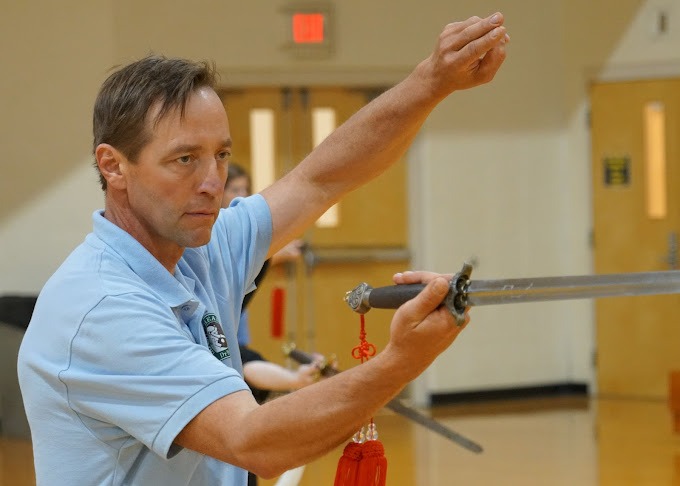
“Stick to the Program” is an imperative that all Tai Chi for Health instructors are trained to follow. The warmups, Tai Chi form and cool-down exercises provide participants a complete, safe, effective and accessible workout. Adding additional material can compromise the design, intent and outcomes of each program. “Sticking to the program” ensures that program fidelity is preserved.
However, THCI Board-certified instructors are also encouraged to modify movements as necessary to meet their participants’ unique needs.
One possible modification to a Tai Chi for Health program is to shorten a form. This can be done:
To make a Tai Chi demonstration more observer friendly, i.e. with Tai Chi for Diabetes, and
To save time in a compressed teaching schedule, i.e. with Tai Chi for Beginners
Demonstrating the Tai Chi form at the start of a class is a great way to engage global learners and to show off your own skill. Remember though, that participants who are brand new to Tai Chi might find watching a five minute long demonstration boring and taxing, especially if they have to stand while you demonstrate.
Forms that have repetition like Tai Chi for Diabetes can be shortened easily. Eliminate consecutive repetitions of movements, in this case the second and third repetition of “Cloud Hands”; this reduces twelve “Cloud Hands” to four, and saves roughly one and a half minutes. At the 2024 Annual MT/ST training Dr. Lam employed another option to shorten TCD; he immediately followed the "Heel Kick” section of Tai Chi for Diabetes with “Stroking Birds Tail” each side, bracketed with “Open and Close Hands”; this approach synthesizes Part One and Two of TCD, and again saves roughly ninety seconds.
In Tai Chi for Beginners the second and third repetitions of “Parting Wild Horses Mane” and “Brush Knee and Push” can be dropped to shorten the form. This can be useful when incorporating a new movement like “Play the Lute” into the form. During Step 8 of the Stepwise Progressive Teaching Method, “Practice Along with Me”, the instructor can take this approach to ensure a maximum number of repetitions of the new movement while giving participants a review of previous movements. This technique also works with “Repulse Monkey”; reduce four repetitions to two, when you and your participants are eager to add “Stroking Birds Tail” to the form.
Eliminating consecutive repetitions of “Waving Hands” can also be useful in teaching and practicing Tai Chi for Arthritis and Tai Chi for Energy. Eliminating repeated movements can also be useful when practicing in cramped quarters like hotel rooms or small studio spaces.
When you do lead a form with reduced repetitions of movements, be sure to tell your participants the modifications to the sequence before you commence, or chaos will ensue! Even then they may not be completely clear on how you are shortening the sequence, so it’s a good idea to reassure them to “Just follow me and you’ll be fine.”
It’s also a good idea to dial the slow up to eleven when shortening a form. When we remove consecutive repetitions from our practice, the next movement arrives much faster than we expect. Confusion and agitation may result for you and your participants, without sufficient time to let go of ingrained habits.
And as always, enjoy your teaching and practice!
* This article originally appeared in Dr Lam's Tai Chi and Health Newsletter- Issue Number 299, July 2026
Connect
Tai Chi Lake Geneva’s mission is to offer safe and effective Tai Chi classes that are accessible to all
Learn
sign Up
262/949-4713
© 2025. All rights reserved.